Sunday, 31 October 2021


  This sylvan scene is in the heart of London. Today I visited Edible Landscapes, a forest garden project which occupies a plot in the more municipal surroundings of Finsbury Park. 
 I've written about forest gardening and permaculture in a number of entries, particularly in reference to Martin Crawford's work in Devon. Suffice to say the basic ethos is to design a largely self-sustaining ecosystem using perennials that can be cropped for food and/or other practical uses.
 There are numerous smallholding scale forest gardens in rural parts of Britain; away from the urban centres it's still possible to go "back to the land". In a city like London permaculturalists tend to focus their efforts on community gardens as a way forward. Back gardens and allotments have scope for experimenting with forest gardening principles but needless to say very few people have an area big enough for a forest!
 Edible Landscapes grow a wide range of species suited to this approach. There are some familiar native and garden plants among them but many are not much seen outside of botanical gardens if at all. It's good to know that London has places like this. 

Saturday, 30 October 2021


Hedgerows that were bursting with blossom in spring are now laden with berries.

Thursday, 28 October 2021


 A walk in the Hertfordshire countryside confirms that the leaves are quite late to fall this year. The russet and ochre tones of autumn are in evidence but generally the shade is still green. 

Wednesday, 27 October 2021


 The Nasturtiums on the allotment keep on growing and flowering even in late October. Different varieties of Nasturtium have different growth habits ranging from compact to sprawling. These are definitely the spreading type!   

Tuesday, 26 October 2021


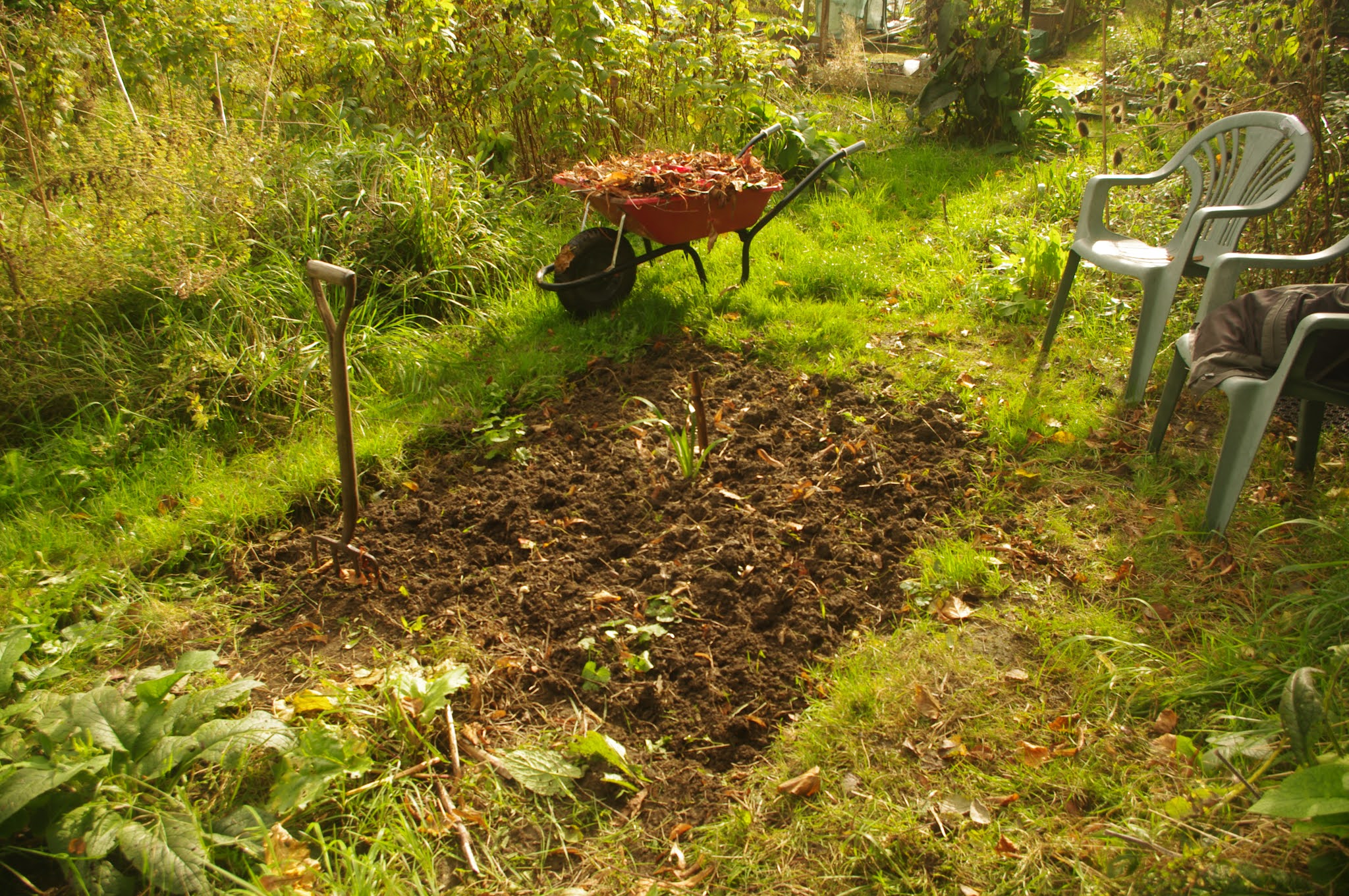
 I tickled the rhubarb patch with a fork to pluck out weeds and keep the couch grass at bay. Then I added a mulch of leaves which are part of nature's bounty at this time of year. Bare earth is often regarded as a sign of a 'tidy' garden or allotment but nature abhors a vacuum and that includes bare earth. The emergence of 'weeds' is the first step to repairing the damage done by exposing the soil.
 Having said that I don't want the rhubarb patch to become overgrown so I aim to protect and build the soil with mulches. Leaves decay over winter to make an excellent soil conditioner but they are low in nutrients. I watered the mulch with comfrey tea to add NPK. This also had the effect of wetting the dry leaves which will hopefully stop them from blowing away until they get properly soggy.

Monday, 25 October 2021


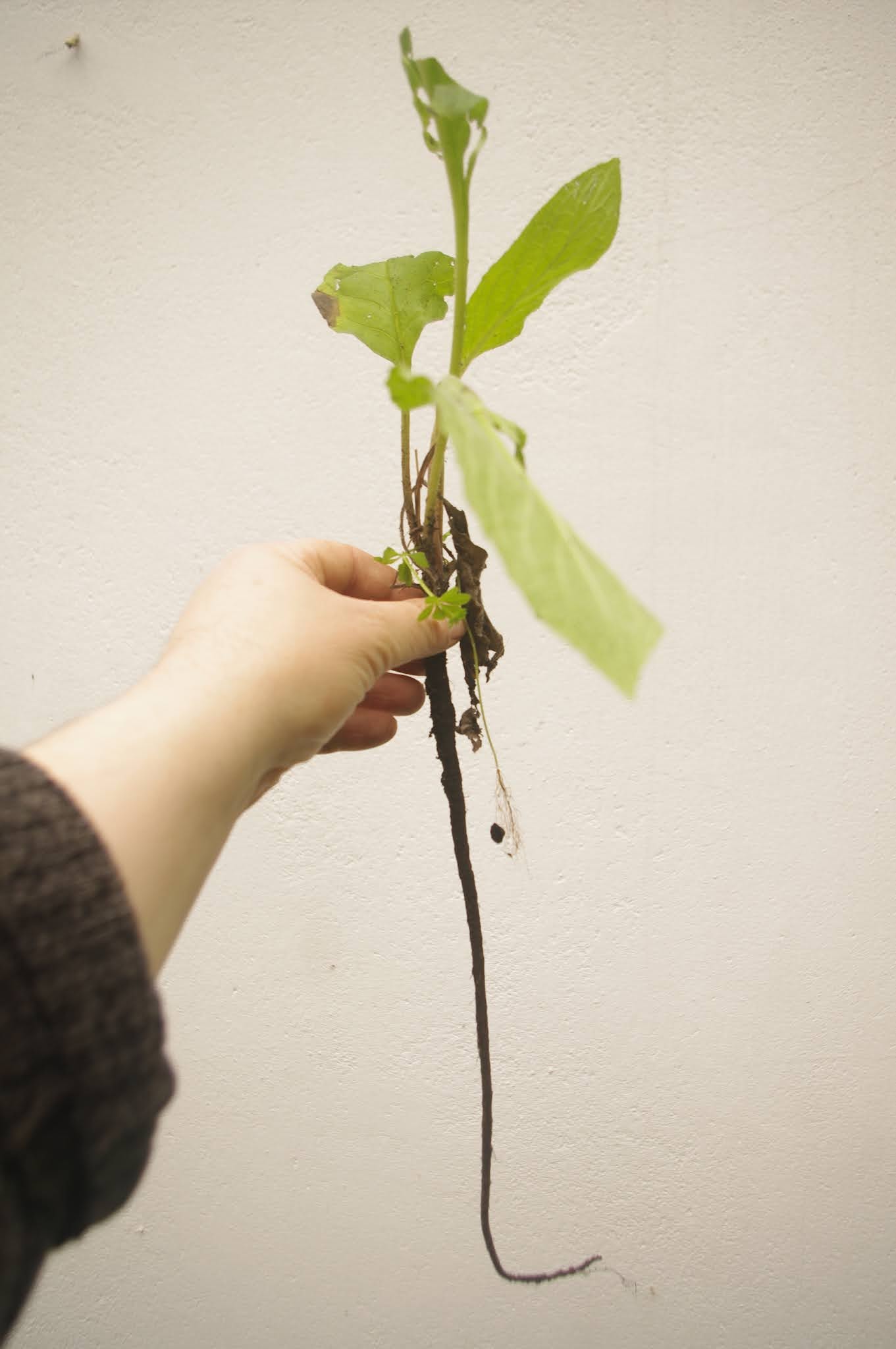
 Roots and shoots part four. Green Alkanet (Pentaglottis sempervirens) is a plant with a deep tap root. This is a young specimen and it's already pretty long. Some plants have a mass of fibrous roots but a tap root grows straight down with smaller roots branching off. In doing so the plant can access moisture and nutrients at deeper levels and the root provides a very firm anchor.
 P. sempervirens is a widespread weed/wildflower with a mass of foliage and an abundance of small blue flowers in spring. Actually I would describe it as semi-evergreen rather than sempervirens. A prolonged cold spell may cause the foliage to die back but the tap root makes it pretty indestructible. And hard to eradicate as many gardeners have found. It's difficult to extract without snapping the root and will regenerate from what remains in the earth. 
 Actually -as I have said more than once in this diary- I like Green Alkanet. So do bees, they like it very much indeed. Certain plants resist our attempts to defoliate the planet and I place P. sempervirens in that category.

Sunday, 24 October 2021


  It's not exactly a gravel garden but I've planted various bulbs in this old oil drum over the years. Self-seeders like Herb Robert and Purple Toadflax generally pop up too. I seem to have accumulated a number of cracked and broken terracotta pots so I smashed them up for a layer of chippings.