Monday, 30 August 2021


  I took a walk along a short stretch of the River Lea in north London. The Walthamstow Marshes (above) separate the boroughs of Hackney and Walthamstow. The River Lea itself arises in Bedfordshire, flows through Hertfordshire, forms the border with Essex and enters Greater London joining the Thames at Bow Creek. NB also known as the River Lee.
 Looking down from the sky one would see a series of lakes alongside the course of the river stretching from the outskirts of London at Cheshunt as far as Walthamstow. The first cluster are gravel pits long since flooded followed by a chain of 13 reservoirs. They are important habitats in their own right and there are others along the way notably the Lee Valley Regional Park and the Tottenham/Walthamstow/Hackney Marshes.
 By accident they formed a corridor for nature to thrive deep into the heart of the metropolis. Over time they have come to be recognised as a resource for ecology and leisure and managed accordingly. They've become very popular with Londoners seeking fresh air and greenery though I must admit I slightly miss the days when I could wander around with hardly a soul in sight!
 I've taken a good many photos over the years so perhaps I'll dig some out for an entry or two in the near future.

Friday, 27 August 2021


 I mentioned seeing Purple Loosestrife (Lythrum salicaria) at the South London Botanical Institute last week. It makes a fine plant for a garden -botanical or otherwise- as long as the soil is moist. Of course the best way to see it is in the wild where it can form extensive stands along streams and ditches. 
 The Walthamstow marshes are part of a ribbon of habitats that stretch along the Lea Valley bringing the wild into the heart of London. Purple Loosestrife grows in abundance. These are a couple of old photos but I'll be over that side of town at the weekend so I'll head for the marshes.


Wednesday, 25 August 2021


 Still getting a few Raspberries. Late summer is turning to autumn.

Monday, 23 August 2021


 Himalayan Balsam (Impatiens glandulifera) provides a big hit of late summer nectar.  The speckled pattern guiding pollinators into the heart of the flower is clearly visible in the photo above. Bumblebees in particular forage on I. glandulifera in which case you can only see their backside sticking out!
 NB Himalayan Balsam is regarded as an invasive menace by many (though not all) ecologists. I won't revisit these arguments here but I have written about them in previous entries on this species.

Saturday, 21 August 2021


 Compost bin mark 3. I mentioned a while ago that I modified a 'Dalek' style plastic bin. I wrapped insulation material around it then put a slightly larger bin over it to create a rudimentary double walled 'hot box' composter. [see entry dated 24th. March 2021] 
 'Hot' might be an exaggeration, it's probably just a bit warmer. Unfortunately it eventually attracted the attention of a local rat so I've tried a further modification with the addition of a wire mesh base.


 I think chicken wire might not be up to the task- rats have got strong teeth! I remembered I had some heavy duty mesh that's intended as a metal lath for plastering. It wasn't wide enough so I stitched two lengths together with garden wire.


 After standing the bin the right way up I folded the excess round the sides to make a 'skirt' of mesh. Hopefully it will now be rat proof but time will tell... 
 A solid base would be another option e.g. a concrete slab. Mesh is preferable however because it allows the biology of the soil to start interacting with the organic matter. All those lovely organisms can get straight to work. 

Friday, 20 August 2021


  Went along to the South London Botanical Institute yesterday to do a bit of botanical gardening. The garden contains an interesting mix of native plants and 'exotics'. For example a Chusun palm (Trachycarpus fortunei) rubs shoulders with a couple of UK wildflowers by the pond.


  Marsh Mallow (Althea officinalis) has been used for various edible and herbal preparations over the centuries- needless to say that includes the original recipe for marshmallow.


 Purple Loosestrife (Lythrum salicaria) is another beautiful wildflower that likes to be near water. It causes no problems here in its natural habitat but is considered extremely invasive in the States. 

Wednesday, 18 August 2021


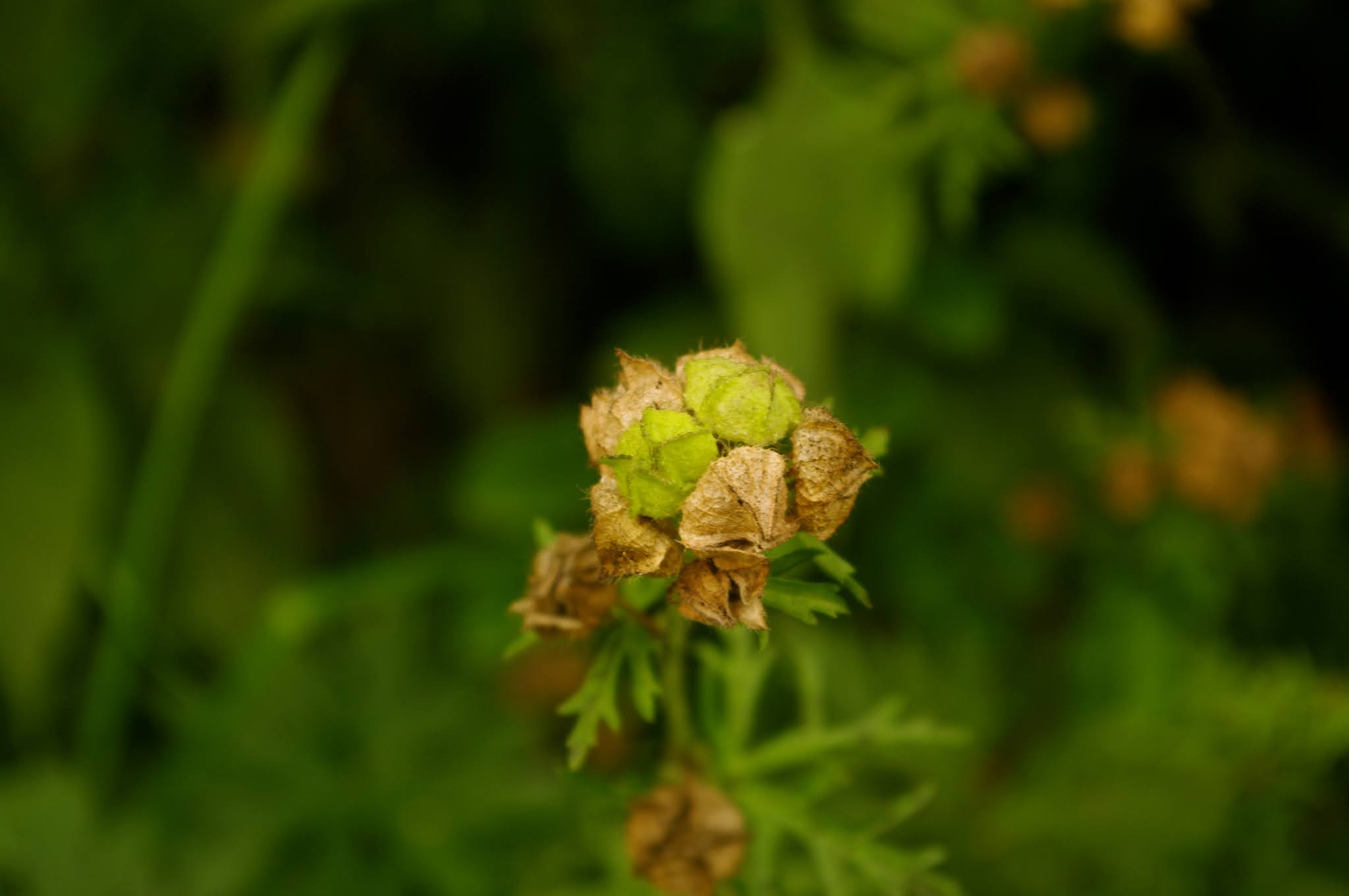
 I planted Musk Mallow (Malva moschata) in the wildflower patch on the allotment last year. I noticed it started to self-seed so I'm encouraging that trend this year by collecting pinches of seed and scattering them. Hopefully more of the same will follow...