A diary of back garden botany, urban ecology, rural rambles and field trips to the middle of nowhere...
Tuesday, 30 June 2020
Musk Mallow (Malva moschata) flowering prettily in the wildflower patch on the allotment. Unlike the Common Mallow mentioned several days ago M. moschata isn't very common. There is also a form with pure white flowers. Common Mallow is probably too "untidy" and prolific to be favoured by ornamental gardeners but the pink and white Musk Mallows would look fine in a sunny herbaceous border.
Monday, 29 June 2020
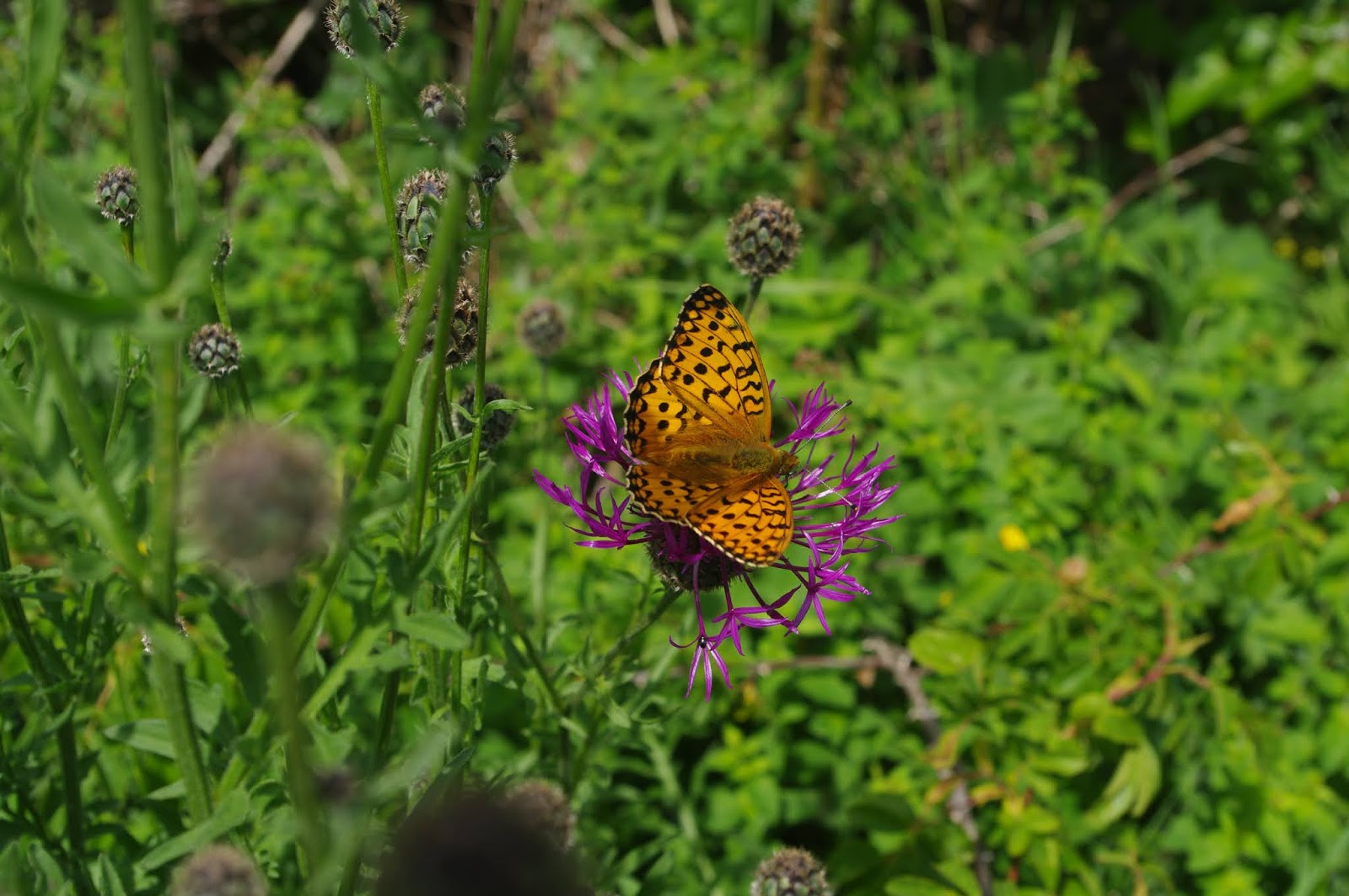
The profusion of butterflies has been a notable feature of my recent walks. One particular footpath was a very nice coda to my route last Thursday. I had no particular expectations other than it took me off the Chiltern Way to the village of Charlton where I could pick up a lane back into Hitchin.
The path runs between broad fields of arable monocultures for several hundred yards (generally butterfly free zones). To my delight clouds of butterflies rose up with each step I took.
I think several factors must have made this corridor so populous (there were many bees too). The hedging grows quite high on either side of the path thereby providing both shelter from the elements and combinations of sun and shade. The rows are a mixture of deciduous trees and shrubs that have not been flayed to bits, which is the fate of many hedges in the countryside.
Dog Roses and Brambles scramble through them. The way is sufficiently wide that tall grasses flourish both sides of the well trodden path and there are many wildflowers: spiky Mulleins, shaggy Knapweeds, ragged Thistles, pincushion Scabious, airy Umbellifers, frilly Bedstraws and plenty of Nettles- both the stingers and the Deadnettles.
All this seems to be very good news for the butterflies and makes me think that the concept of "wildlife corridors" has some validity.
Sunday, 28 June 2020
Friday, 26 June 2020
Thursday, 25 June 2020
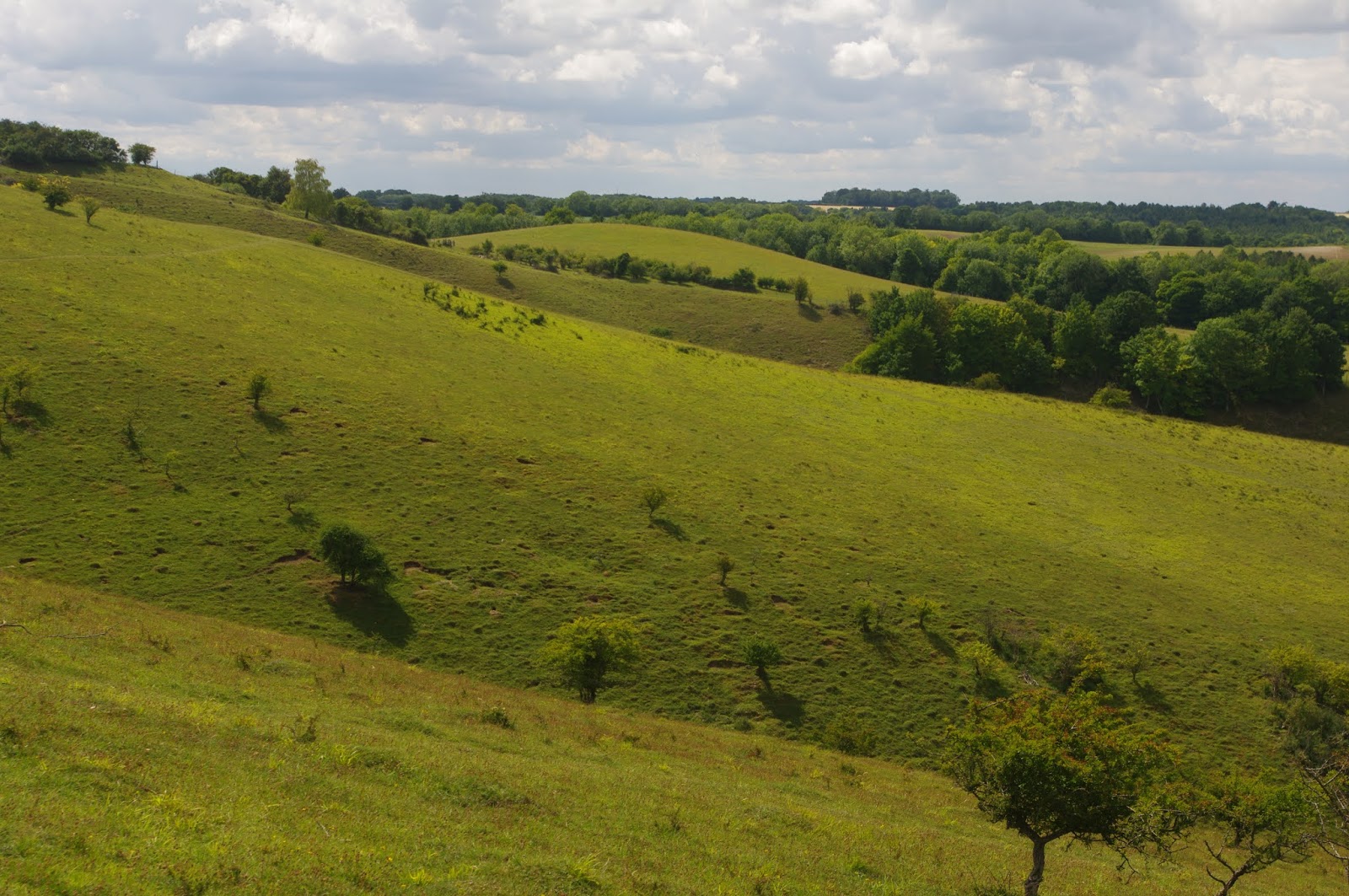
Seeing so many butterflies has been one of the joys of recent walks taking in Knocking Hoe, the Pegsdon Hills and sections of the Chiltern Way. These fragments of unimproved grassland combined with pockets of light woodland, scrub and some decent hedgerows are classic habitat for butterflies and moths. Even so I think I have seen more butterflies round here than ever before. Perhaps my timing has been just right or perhaps it's the weather we've been having or a side effect of the lockdown but something seems to have made it a good year.
Wednesday, 24 June 2020
Knocking Hoe and the Pegsdon Hills have been the subject of a number of entries in recent weeks. As I have noted these survivals of "unimproved" chalk grasslands are a haven for wildflowers that have largely been lost in the surrounding countryside. From a distance the rolling slopes may seem rather sparse in terms of vegetation but the grasses are alive with tiny flowers such as Bird's-foot Trefoil (Lotus corniculatus).
Wild Thyme (Thymus polytrichus) forms mats of flowers among the blades of grass. It is aromatic and much frequented by bees, butterflies and moths. The declining populations of our pollinating insects are due to many factors but habitat loss may be the greatest threat of all. For example T. polytrichus and L. corniculatus are not only a food source for butterflies and moths on the wing they are also a larval food plant.
Here is another tiny remarkable plant: Self-heal (Prunella vulgaris). I see it everywhere: on the Pegsdon Hills and growing out of cracks between paving stones in London. I have seen it in the high mountain meadows of northern California. If I went to Asia I would find it there.
In the 16th. century the English herbalist John Gerard wrote that "there is no better wounde herbe in the world" when applied to the skin. The Cherokee ate it, Chinese herbalists used extracts for medicine.
Certain gardening books tell you that Self-heal is a weed to be eradicated from your lawn. Perhaps one day lawns will be gone along with the civilisation that tended them but Self-heal is indestructible.
Subscribe to:
Posts (Atom)