Saturday, 22 June 2024


 Another shot of a Meadow Brown. This one is nectaring on Greater Knapweed in the wildflower patch on the allotment. Two factors are crucial for butterflies. One is the weather during the life cycle of egg/larva/pupil/adult. The other is the availability of their food plants.
 I mentioned in Wednesday's entry that the weather we've had may result in a bad year for butterflies. I noted that I saw none at all on a route I walked which is usually terrific for butterflies from June onwards. Emergence will no doubt have been delayed/diminished by the atmospheric conditions. Not only that I was dismayed to see that the length of this stretch has been heavily mowed.    


 Ordinarily a wonderful selection of wildflowers grows on the verges either side of the path, particularly on the right which is south facing. That has been decimated apart from Stinging Nettles and a few Umbellifers growing out from within the hedgerows. 
 This track runs between large fields of arable monoculture of negligible benefit to wildlife and sprayed regularly. These hedgerows and the space between are therefore an especially valuable habitat providing both shelter and food for the complete life cycle of a butterfly.
 The situation is not entirely hopeless. For example there is a lot of bramble running through the hedges which is about to come into flower. But it would have been so easy just to mow a central strip along the well defined path leaving a foot or two of longer grass and wildflowers at the base of the hedges. This would have balanced the benefits to wildlife with the path being used as an amenity.
 I thought countryside management had become a bit more enlightened. Bad weather is what is but bad practice is a double whammy. Moreover fewer butterflies on the wing this year means less caterpillars for next year. I'm sorry to say this particular habitat may take a long time to recover its equilibrium. 

Thursday, 20 June 2024


 Summer solstice. The sun sets on the longest day. 

Wednesday, 19 June 2024


 The landscape around my home town of Hitchin is a farmed one on the whole. Nonetheless there are several walks in the vicinity that are excellent for butterfly spotting. 
 I walked one such route today in ideal conditions- hot, dry, sunny. There was a gentle breeze in the surrounding countryside but the particular track I followed has high hedgerows on either side so the air was still. Usually abundant with butterflies as midsummer approaches but not one did I see. 
 I did spot several Meadow Browns in a grassy meadow I cut through on the way home but I fear this may be a bad year. We had a wet winter and spring and June has been cool and breezy. Then again there was an unseasonably warm spell in April. I saw butterflies appearing early during that period- a bad thing if out of synch with their food plants.
 It's difficult to second guess the effect of the vicissitudes of the weather and the fluctuations that may cause. I'll be on the lookout for emerging butterflies in the weeks ahead. 

Tuesday, 18 June 2024


Oxeye Daisy (Leucanthemum vulgare). It feels like summer has arrived.

Monday, 17 June 2024


Campanula persicifolia and Cotinus 'Grace'. 

Sunday, 16 June 2024


 Yellow Rattle (Rhinanthus minor). An annual of grassland, the flowers are yellow and the seeds rattle in their pods. 
 R. minor is a hemi-parasite. It is parasitic on the roots of grass but nonetheless has the capacity to photosynthesise. The vigour of grass is considerably reduced by the presence of Yellow Rattle thereby allowing other species to flourish in meadow habitats.
 For that reason it is often in the mix when trying to establish new meadows with combinations of grasses and wildflowers. The photos above were taken on the Hoo Bit nature reserve last week which adjoins the Pegsdon Hills. I think Hoo Bit was reclaimed from a wooded area rather in the style of wood pasture. Perhaps Yellow Rattle was introduced or perhaps it was present in the surrounding area anyway.  

Saturday, 15 June 2024


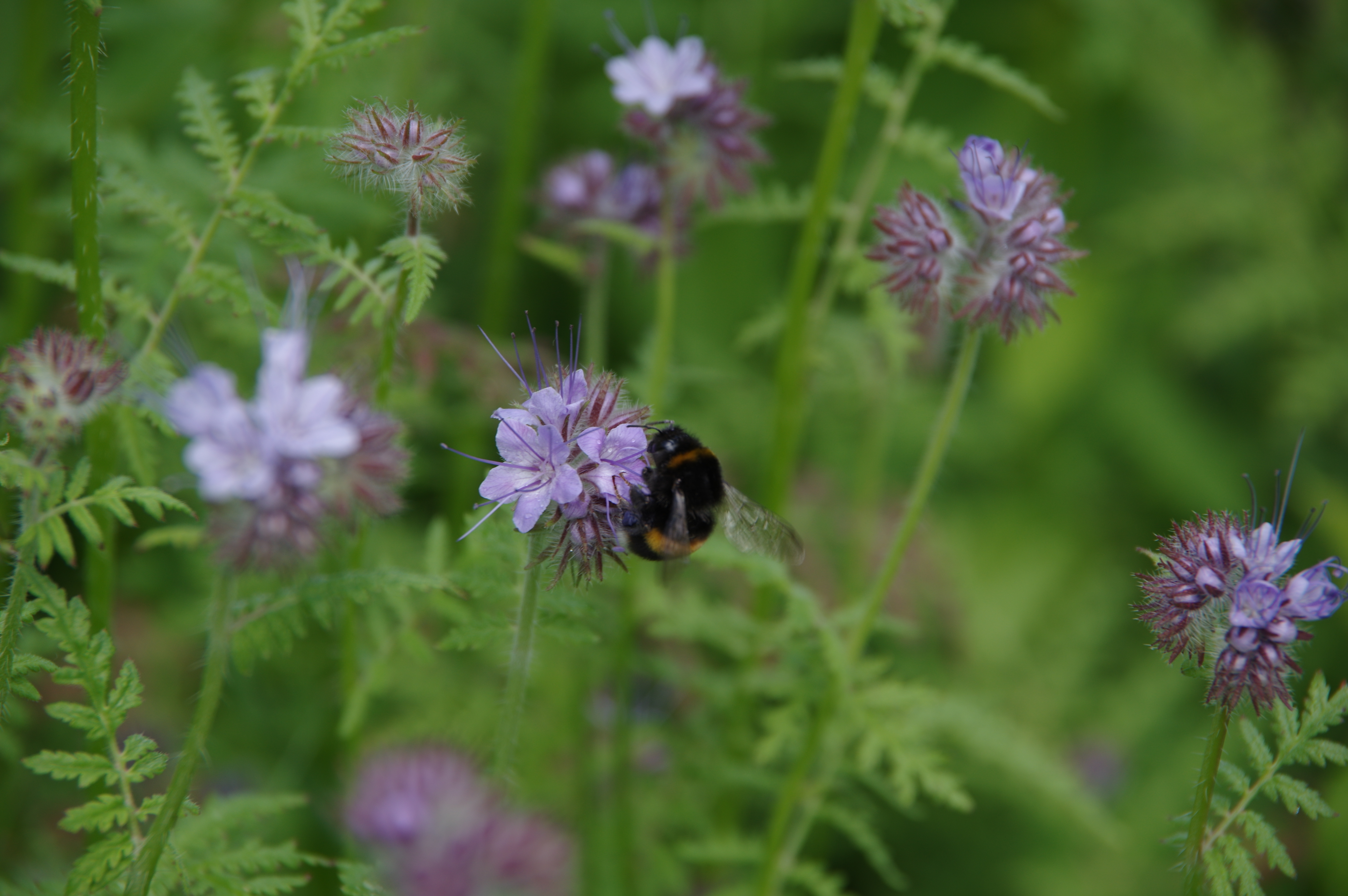
 Phacelia tanacetifolia is good for biomass and bees; a fast growing annual that can be sown through spring and summer. Often cited as a 'green manure' i.e. chop and drop to enrich the soil. Agriculturally the advice is to do that before the flowers set seed but self-seeding is fine by me.
 There's a bed on the allotment where I conducted an experiment to see if Wild Strawberry (Fragaria vesca) would form a ground cover that could suppress weeds and coarse grasses. Answer: no (though the Wild Strawberries held their own amongst them). 
 I dug the bed over in spring and sowed Phacelia rather than leaving it fallow. I hoped Phacelia would grow faster than weeds -thereby shading them out- which has proved to be reasonably successful. And very pretty with lots of bees.