Sunday, 15 January 2023


 I have 'wild camped' on Dartmoor a number of times i.e. hiking across the moor and finding a spot to pitch as night falls or the rain falls or both! I have also stayed on two campsites and even that was pretty wild. On one I was so lashed by the wind and rain I wasn't sure if my tent would withstand it. On the other I was almost flooded when a nearby brook burst its banks. Backpacking on Dartmoor is tough but exhilarating. 
 So it was depressing to read that one of the landowners in the area has won a legal case to prevent wild camping on his estate and by implication the moor as a whole. Dartmoor has long been the only place in England where wild camping is legal- or was thought to be. Dartmoor is a National Park and even the National Parks Authority has taken the view that wild camping is permitted. It now has a disclaimer on its website saying that permission must be sought from the landowner.
 Presumably that won't be granted by the hedge fund manager who owns the 4.000 acre Blachford Estate. The majority of Dartmoor is owned by the Duchy of Cornwall and I hope the King will take a more lenient view. Over the years many teenagers have hiked and camped on the moor undertaking the Duke of Edinburgh Award. One hopes that Charles would approve of the kind of healthy, outdoor activity advocated by his father. Likewise the annual Ten Tors Challenge is a much respected fixture. I have on several occasions passed squaddies training on the moor- is anyone going to say "get orf my land" to the British Army?
 Anyway whether with royal approval or not I will wild camp on Dartmoor again. If some stockbroker wants to prevent that they will have to find me first! Perhaps we will have to invoke the spirit of the mass trespass on Kinder Scout and insist on the right to roam. 
Saturday, 14 January 2023


 Plants are routinely categorised as deciduous or evergreen. Often the distinction is clear. At this time of year we see lots of bare trees but some still have their greenery e.g. Holly. In fact even evergreens drop leaves at some point (spring in the case of Holly) but have sufficient new growth to be considered evergreen.
 Also there is an intermediate category referred to as semi-evergreen (or semi-deciduous). Strictly speaking this relates to plants that shed their foliage over a short period and rejuvenate quickly. It can also apply to plants when they are affected by prevailing conditions.
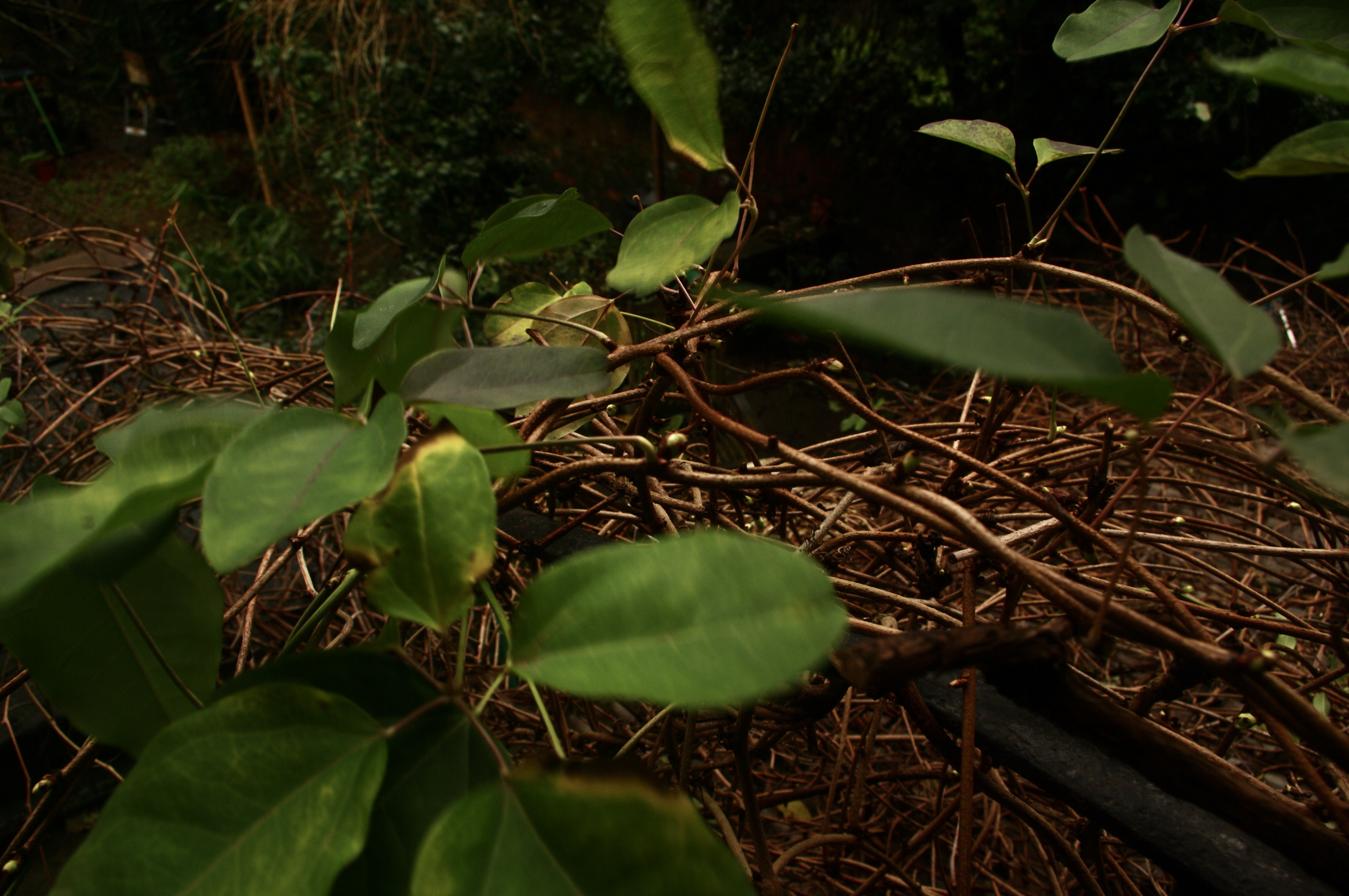
 This Chocolate Vine (Akebia quinata) sprawling all over the porch has always dropped its leaves entirely during autumn. This year however it retains some even as new buds are starting to form. I thought the cold snap before Christmas would finish off the last leaves but no. Perhaps it's due to the otherwise mild winter we're having. Or perhaps it's because the drought of last summer seemed to make the vine more vigorous rather than less.    

Wednesday, 11 January 2023


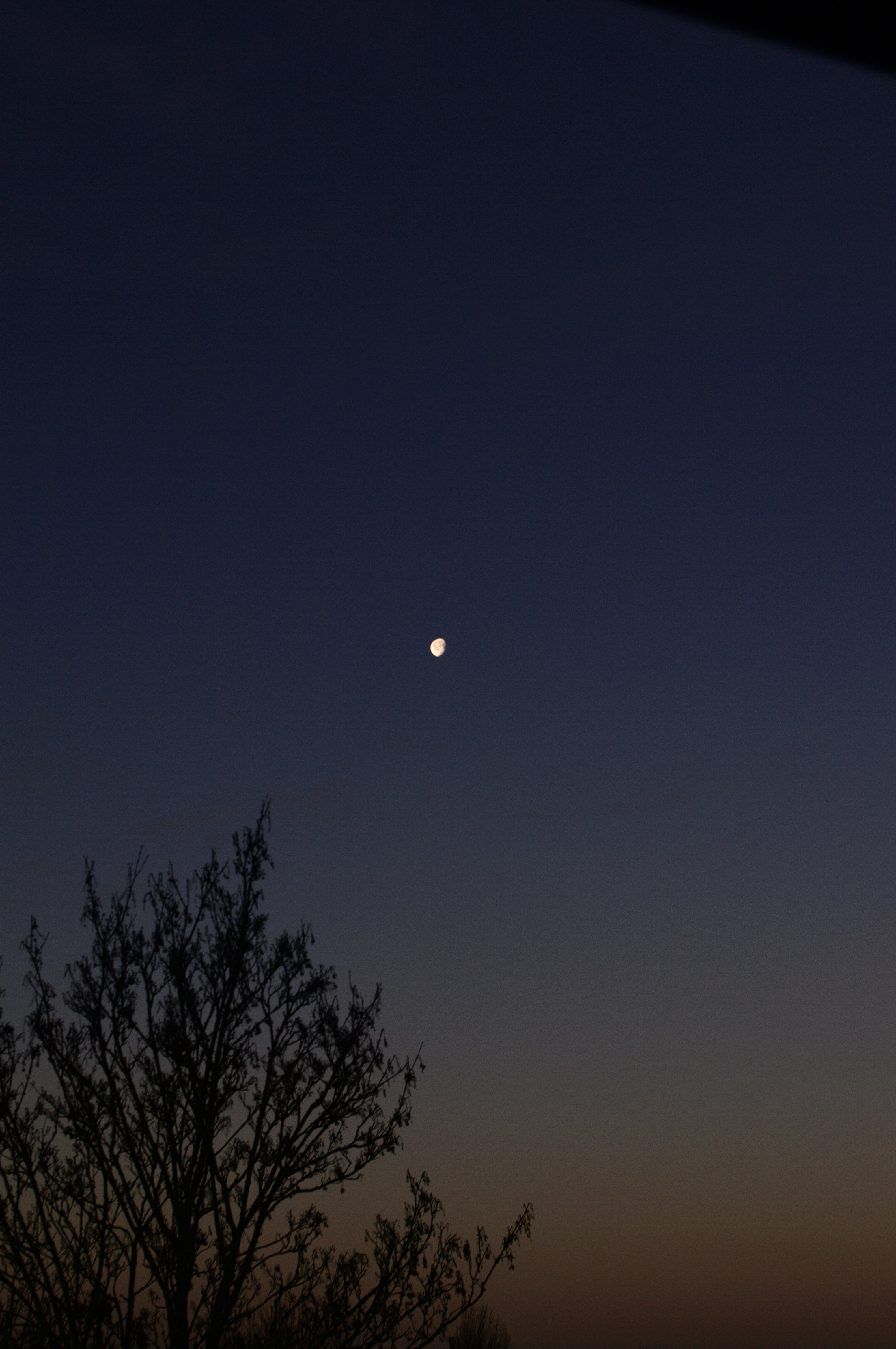
 How high the moon. There seems to be some debate whether or not plants are influenced by the moon. Perhaps the question of why would they be affected should be turned on its head: why wouldn't they be? Surely all elements of the cosmos in vast or subtle ways have some bearing on each other?

Monday, 9 January 2023


 It was about this time six years ago that I was preparing to publish the blog. The first entry went out on January 21st. 2017 noting that Helleborus foetidus was the first plant to flower in the garden. The next entry was on February 7th. observing the arrival of an early bee on the Snowdrops. Followed on February 8th. by a reminiscence of visiting Wistman's Wood on Dartmoor. 
 In the weeks that followed I posted entries on subjects such as the ancient Ankerwicke Yew and seeking out Butcher's Broom in Epping Forest. I wrote about a patch of Winter Aconites in Hertfordshire and various plants in the garden. In retrospect I see that many of the themes in this diary were present at the outset.
 I started at the start of the year with the idea that I would describe my back garden over the course of four seasons along with some notes on seeing wildflowers in their natural habitats. My interests informed the blog but then again doing the blog deepened my interests.
 I wrote in the spirit of "Dear diary" as though addressing an imaginary reader. As time went on I became aware that I was addressing some actual readers. Some are people I know, some are people I've never met. If you're reading this now: hello!
 I don't really consider myself to be an aficionado of "social media". Nonetheless blogging has provided me with an ideal medium for spontaneous expression. The diary is neither an academic treatise on botany nor a portfolio of photography. Having said that I try to be accurate where I touch on the natural sciences and I like to think that some of the photographs have merit. 
 As it is first and foremost a diary I can go into detail or mention things in passing as the mood takes me. And depending how much time I have on my hands!   

Friday, 6 January 2023


 On the strength of my hiking trips to California I take an interest in the snowpack in the Sierra Nevadas at this time of year. I've seen plenty of snow lingering well into the summer (for example as seen above near Lake Tahoe in July 2019). Even so California has experienced several periods of severe drought in the past twenty years and is arguably in an extended "megadrought".
 So it's good news that the statewide snowpack is currently at 174% of average but time will tell. I seem to remember saying much the same thing at this point in January 2022 when the snowpack was at 160%. There followed the three driest months for California on record. On April 1st. the snowpack was at 38%.
 From the hiking perspective it has a bearing on when certain trails become accessible without alpine gear and when the wildflowers begin to bloom. In the wider context approximately one third of California's water supply comes from snowmelt.

Wednesday, 4 January 2023


 In my mind I've been roaming over the South Downs. Thinking of walks to do in the year ahead, daydreaming and looking at maps. Perhaps a winter walk or two then the longer, warmer days will be here...


 Hassocks is a convenient railway station to access the foot of the Downs. Beyond that point the train enters a tunnel to Brighton. Between Hassocks and the Downs is Butcher's Wood which is carpeted by Wood Anemones in early spring followed by a haze of Bluebells.  


 Many of our native Orchid species can be found up on the Downs in locales like Wolstonbury Hill, the Devil's Dyke and Mount Caburn. 


 The South Downs are an important repository of wildflowers being a patchwork of habitats including chalk grassland, lowland heath, woodland and wetland. As I recall this photograph was taken on the coast path walking over the Seven Sisters from Eastbourne towards Cuckmere Haven. 


 High summer is probably the peak for wildflower spotting but there are plenty to see well into autumn. I remember lots of Marjoram last September walking the South Downs Way near Lewes. I will aim to revisit some of these routes and seek out new ones. 

Sunday, 1 January 2023


 Stinking Hellebore (Helleborus foetidus) is invariably one of the first wildflowers to put in an appearance. Today I walked out from Hitchin to a particular footpath along a field margin where I have spotted H. foetidus before. I thought it might be too soon but sure enough this one was already in full growth on the first day of the year. I suppose I felt the need to seek out a harbinger of spring. Also there is a village pub nearby- that might have had something to do with it!