Saturday, 26 November 2022


 White Comfrey (Symphytum orientale) self-seeds on the allotment which is fine by me. However, this clump is growing among among the raspberry canes which is not ideal so I dug it up to transplant to the garden.


  It had a deep tap root as is the case with most species of Symphytum. For this reason Comfrey has the reputation of being a 'dynamic accumulator' i.e. drawing up nutrients from deep in the soil. To this way of thinking the leaves are correspondingly rich in NPK: nitrogen, phosphorous, magnesium. Some gardeners (including me) steep the leaves in water to make 'Comfrey tea'- a stinky brew applied as a liquid plant feed. Alternatively a chop and drop approach uses the leaves as a mulch or they can simply be added to the compost heap.
 S. orientale is a beauty and I generally leave it be but the coarser Comfreys I treat as a cut and come again crop for the leaves. The flowers of all species attract bees a plenty.

Friday, 25 November 2022


 This is Silverleaf Fungus (Chondrostereum purpureum) taking hold on a Saw-toothed Azara (Azara errata) at the South London Botanical Institute. Actually I wouldn't have known which fungus it is but I was there yesterday and several of the SLBI's expert gardeners and botanists all concur it's Silver Leaf. Silver because it makes leaves turn silver and purpureum because it develops a pronounced purple tinge.
 Infection is by airborne spores landing on sapwood that has been recently exposed e.g. by pruning or damage. This patch is by a branch cut sometime in the past though that's not necessarily the point of entry. It's a fungus of old dead wood but affects living trees too. Prunus species are said to be particularly vulnerable which makes sense. Cherry trees for example often have dead and dying branches among the living ones. I remember we had a plum tree in the back garden which ended up being more dead than alive. It kept on going with bits dropping off until eventually only a stump remained.
 Unfortunately Silverleaf may prove fatal to the Azara in the long run and we discussed whether an amputation might help, decision pending. Azara serrata is generally described as a large shrub but the one at the SLBI has become a small tree. It's multi-stemmed from a couple of feet above ground level and would remain shapely if the trunk affected is to be removed. In which case I offered to do the job of taking that limb out which may or may not save the rest. 
 It would be a shame if the Azara is a goner but it is a botanical garden and that includes fungi; I find the form and texture of funguses absolutely fascinating!

Monday, 21 November 2022


 Plants that flower in winter are few and far between but there are some good choices for winter foliage.  Arum italicum is the continental variant of our native Arum maculatum; both have the useful characteristic of growing in the deepest, driest shade. 
 A. italicum has glossy marbled leaves from autumn through winter. The intriguing spadex flower appears in spring which becomes a spike of bright red/orange berries in late summer. NB Arums contain toxins and the berries are known to be particularly poisonous. 
 I bought a pot of A. italicum at a boot sale on Sunday. The lady I bought it from is there most weeks and announces her presence by calling out "Buy my lovely plants". Only a fiver which is excellent value since I got a dozen or so divisions out of it. Usually sold as a clump this is in fact a bulbous species and simple to divide by carefully teasing apart the root ball. Each bulb will form its own clump up over time.  

Sunday, 20 November 2022


 Winter Sun, by which I mean Mahonia x media 'Winter Sun'. This popular garden plant is one of a number of hybrids derived from the Asian Mahonias; most likely a cross of M. japonica and M. lomariifolia
 The writer/gardener Val Bourne has noted that it originates from the Slieve Donald Nursery in Northern Ireland circa 1984 as did M. x media 'Charity' back in the 50s. She makes the point that hardy bee-pollinated hybrids began to appear when Asian Mahonias were grown over here. Some of the original species are tender in UK conditions but the garden varieties are pretty darn tough.
 The North American Mahonia aquifolium (which is very hardy) is a low growing suckering shrub that flowers in spring but the Asian relatives are winter flowering and upright to four or five metres tall. Bumblebees will come out of hibernation to forage on them when they get a whiff of the scent.
 M. aquifolium is known as the Oregon Grape for its blue berries in autumn which are edible and this common name is sometimes applied to Mahonia in general. In his book 'Creating a Forest Garden' Martin Crawford states that the fruits of all Mahonia species are edible. I would add the caveat that when a plant has been cultivated as an ornamental one has no way of knowing if it is 'organic' i.e. there may be traces of pesticides, herbicides etc. Personally I would let it grow for at least a year or two before treating it as edible.
 However I saw this healthy looking specimen on a market stall and was happy to buy it for aesthetic reasons. I have a spot in mind under a large Sycamore in the back garden of my flat in London. Mahonia is a genus known for thriving in shade so a bit of Winter Sun is most welcome.  

Friday, 18 November 2022


 Looking back at warmer, brighter days during spring and summer here is a somewhat random selection of pollinators pollinating...


Thursday, 17 November 2022


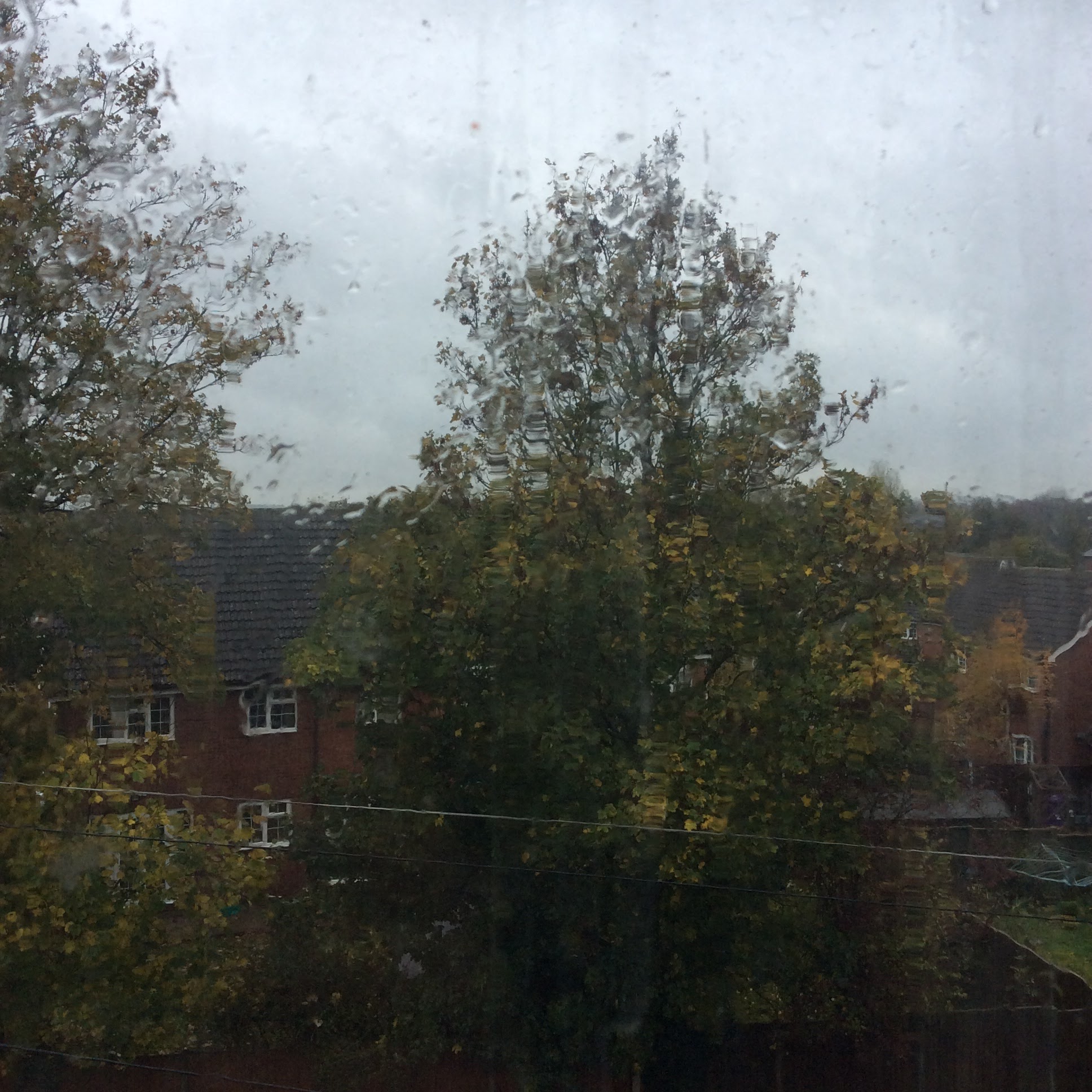
 Looking out the window at blustery rain. This year's drought seems a distant memory. The weather is a perennial subject of conversation- we have a lot of it!
 So I'm wary of making generalisations but I do think that rain has changed in the UK over the past decade or two. Of course we've always had every kind of rain from light showers to torrents, that is the nature of living on an island. Increasingly though we have monsoon-like downpours. The sky is clear, then it suddenly rains so heavily that the air couldn't actually hold more water, then it stops abruptly and the sky is clear again.
 Having said that today is a classic rainy day in England- grey sky, low cloud, persistent drizzle and a wind that will shake the last leaves off the trees. 

Monday, 14 November 2022