The garden is looking lush with the rain we've had recently.
A diary of back garden botany, urban ecology, rural rambles and field trips to the middle of nowhere...
Thursday, 13 May 2021
Monday, 10 May 2021
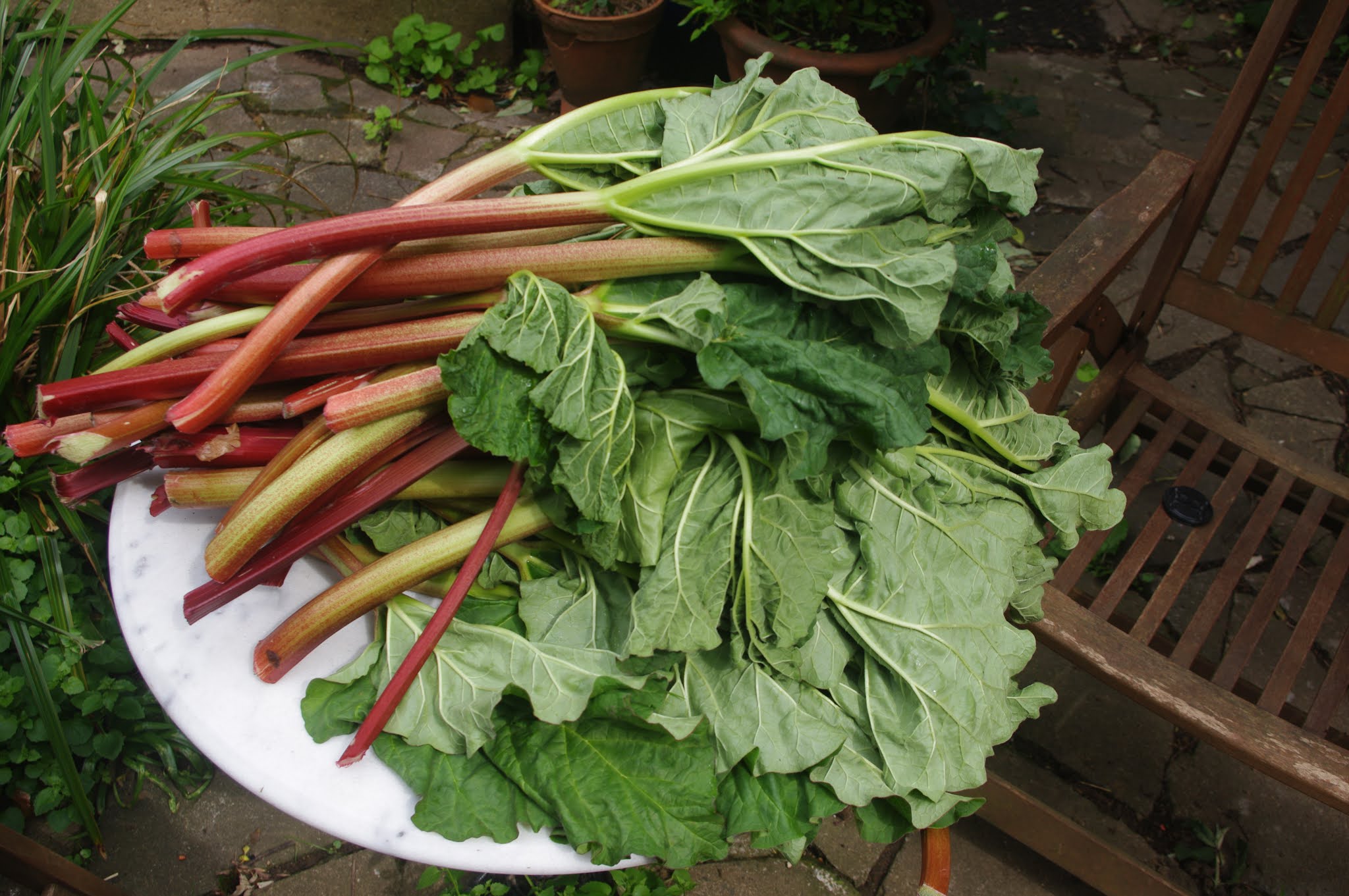
Getting an unexpectedly good crop of Rhubarb from the allotment. I say unexpected because Rhubarb likes a rich, moist soil which the allotment is not. In fact I almost dug up and discarded the crowns last autumn because the results had been disappointing. Now I'm glad I didn't.
Perhaps the crowns took a few years to bed in? Perhaps the soil has improved sufficiently with the addition of leaf mulch and wood chip? Perhaps it was the wet winter? Anyway, something has made the difference and I harvested an armful with several more to come by the look of it. NB needless to say the leaves will be discarded as they contain high concentrations of oxalic acid which is toxic to humans.
I love Rhubarb though not everyone would agree with me. It has a tart, astringent almost sour taste which is perhaps untypical of the Western palate. We have a preference for sweet and savoury in our cuisine but not sour. That doesn't matter- all the more Rhubarb for me!
Sunday, 9 May 2021
Smyrnium perfoliatum is proving to be one of the highlights of the garden this spring. All the more so since I thought my attempts to establish it several years ago had ended in failure. [see entry dated 24th. April]
Then suddenly it reappeared. A few weeks ago I noticed one poking through, then another and now there are five. The colour of the flowers and upper leaves is extraordinary- somewhere between lime green and lemon yellow. The first shard of morning sun makes them look radioactive. They're the brightest thing in the garden all day and take on an eerie translucent glow at twilight.
S. perfoliatum is a plant of the woodland edge in southern Europe as far east as the Crimea. And in this case South London as far east as New Cross Gate.
Friday, 7 May 2021
Tuesday, 4 May 2021
Cowslips (Primula veris) are a prolific wildflower in their natural habitat which is chalk grassland. Unfortunately a great deal of grassland has been lost due to intensive agriculture and urbanisation. Even so P. veris can still be found in the countryside and occasionally in town where conditions allow.
The cemetery in Hitchin, Hertfordshire has drifts of Cowslips in flower among the tombstones. Once it would have been on the edge of town, no doubt some field or pasture that was purchased to become a burial ground. Now it is surrounded by houses- a large council estate on one side and an upmarket development on the other.
The Cowslips persist however. The key to maintaining wildflowers in urban areas is management of the grass cutting timetable. Thankfully the mania for constant mowing has receded somewhat as has the insistence that all "weeds" must be doused in herbicide. In this location at least the Cowslips are doing well.
Monday, 3 May 2021
Memories of Mount Shasta. In recent times I have been in the habit of taking an annual vacation in the States- visiting my friends James and Komoot in San Fransisco then heading out to the backcountry for some hiking and camping. About now I would normally be poring over maps, assembling my gear etc. But not this year needless to say.
So my mind has been turning to recollections of previous trips. Mount Shasta (there on the horizon) has been a feature of three treks in the vast wilderness known as the Klamath-Siskiyou region in Northern California/Southern Oregon.
In 2016 I took the Amtrak Coast Starlight to Dunsmuir then headed to Shasta itself. I camped in the dense pine forest at about 7000 feet above sea level where the tree line meets the snow line. There are seven glaciers on Shasta and it's a popular destination for serious mountaineers (which I am not!).
In 2018 I started once again from the railroad yard at Dunsmuir but heading away from Shasta- a 40 mile hike out to the slopes of Mount Eddy and back again. That was tough- steeply uphill for three days in blistering heat and the few streams en route for taking water were reduced to trickles.
I followed a section of the Pacific Crest Trail which runs 3000 miles between the Mexican and Canadian borders- that's the PCT in the foreground of the photo. A foot sore thru-hiker told me he was finding this section tougher than the desert stages so I wasn't the only one feeling the heat. Every so often the wind would blow from the direction of Shasta bringing with it a delicious chill from the snow covered peak.
In 2017 I hiked around the caldera of Mount Mazama also known as Crater Lake. Over a hundred miles separates these two volcanic features but I spotted Shasta on the horizon. A Park Ranger told me that the oral history of the Klamath tribes still refers to the eruption of Mount Mazama 7,700 years ago. Llao the Spirit of the Below-World broke through at Mazama and rained down fire on the local people. Skell the Spirit of the Above-World took pity on them and descended from the sky at Shasta. They hurled molten rocks at each other until Llao was driven back underground.
Call it a myth or fable but perhaps contained within it is the ancestral memory of two volcanic eruptions.
Saturday, 1 May 2021
A walk in a Bluebell wood in late April/early May is always a highlight of the wildflower year. Hyacinthoides non-scripta is native to the UK and Ireland, also north-western Portugal and Spain and northern France/Belgium/Holland (and a widely naturalised garden plant). It is probably most prolific in the British Isles and Bluebell woods should be regarded as a national treasure in my opinion.
Hitch Wood in Hertfordshire (above) is a particularly good one but there are many others. The presence of H. non-scripta is generally an indicator that the woodland is ancient. There is something almost mystical about walking through the shimmering haze of violet-blue flowers...
Subscribe to:
Posts (Atom)