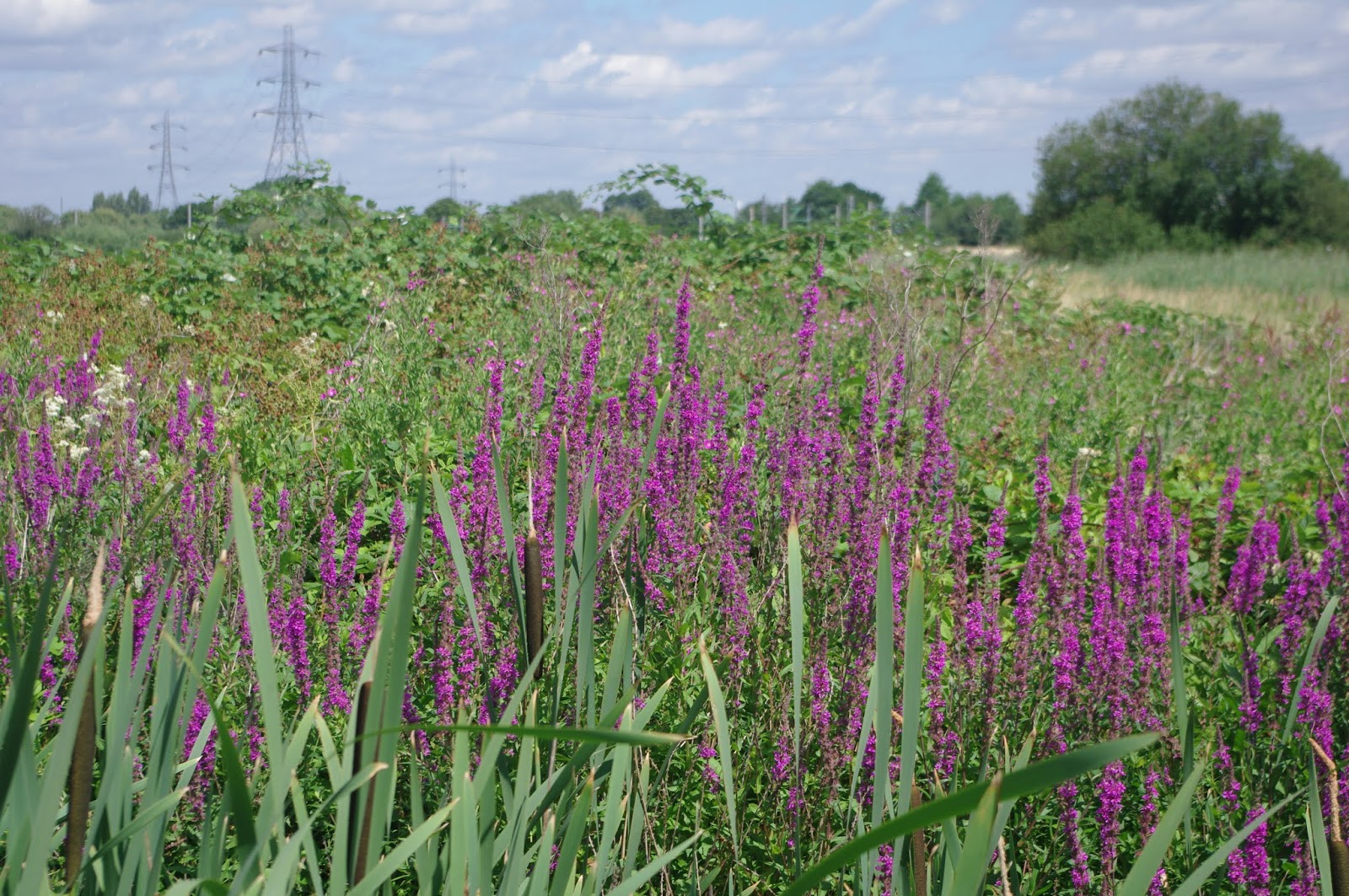
Thursday, 13 August 2020


 Honesty (Lunaria annua) gone to seed with the characteristic papery seedheads.

Tuesday, 11 August 2020


 Vetches are scramblers, and there are a lot of them- in the region of 140 species around the world. This is probably Tufted Vetch (Vicia cracca)? It's classed as a native wildflower; then again it's widely sown as a forage crop, cover crop and green manure and these will have seeded back into the wild.

Sunday, 9 August 2020


 A busy bee making busy round the Nasturtiums on the allotment.

Friday, 7 August 2020


 Yellow Loosestrife sounds like it must be a relative of Purple Loosestrife. In fact there are two plants commonly known as Yellow Loosestrife (Lysimachia vulgaris and Lysimachia punctata) and they are of the Primulaceae family. Purple Loosestrife (Lythrum salicaria) belongs to the Lythraceae family.
 L. vulgaris is native to the UK whereas L. punctata is an introduction from south-east Europe and is sometimes referred to as Garden Loosestrife. They look very similar but the former has whorls of three flowers round the stem wheras the latter has four. Neither are as prolific and widespread as Purple Loosestrife.
 I saw the stand above in Edale five or six years ago. Actually the stems are so flowery I'm not sure which Yellow Loosestrife it is!

Wednesday, 5 August 2020


 There is a small clump of Purple Loosestrife (Lythrum salicaria) coming into flower in the garden. Its growth is modest in this location. It prefers a sunny spot in wet soil and is one of the UK's most vigorous native wildflowers in these conditions.

Monday, 3 August 2020


 Still seeing some big bumblers around.

Saturday, 1 August 2020


 Great Willowherb (Epilobium hirsutum) is another plant of damp meadows often seen growing in ditches and beside streams and rivers. Also known as Hairy Willowherb hence the Latin name.